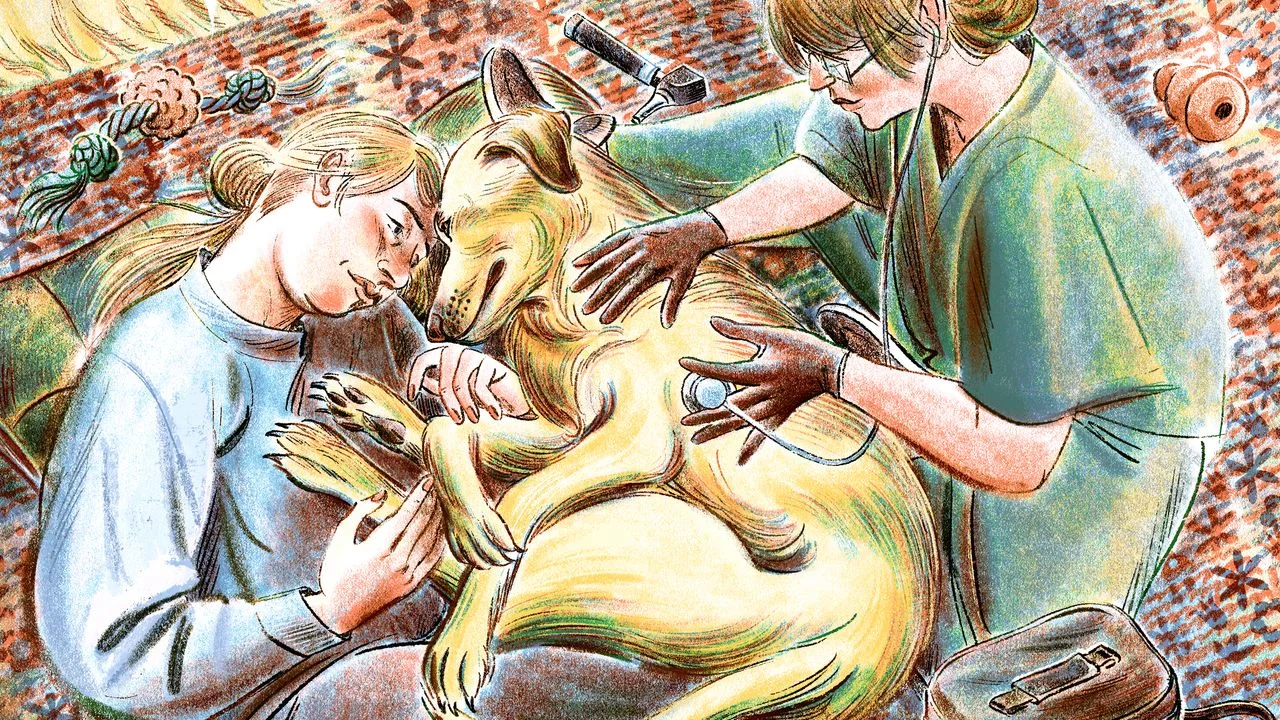
This week's read: When should you say goodbye to a pet?
This week's Saturday essay is Sunita Puri's New Yorker Weekend Essay — a palliative-care physician follows a Massachusetts veterinarian who built one of America's in-home pet hospice practices, and asks the same hard questions that animate human end-of-life medicine: what is a good quality of life, how much suffering is too much, and when is the right moment to let go? Reported through three patient cases, the essay finds that answering those questions for animals may be the only rehearsal most of us get for answering them about ourselves. ~24-minute read.

Estimated read time: ~24 minutes (~4,800 words)
Why this essay, this week
Most of us have been in this position, or will be: the animal you love is old, or sick, or both, and everyone in the room is looking at each other waiting for someone to say the thing nobody wants to say. The question of when tends to arrive before you're ready for it, and medicine — even good medicine — doesn't answer it cleanly.
Sunita Puri's Weekend Essay for The New Yorker, published this morning, takes that familiar dread and subjects it to something rare: the precise, unflinching clinical intelligence of a palliative-care physician who has spent her career at the border of life and death in human medicine, and who now turns that same lens on what is happening, quietly, in American veterinary care. 1
The result is one of those essays that changes the shape of a question you thought you already understood.
Loading content card…
About the author
Sunita Puri is the director of the Inpatient Palliative Care Service at UC Irvine, where she is also an associate professor of medicine. 1 She is the author of That Good Night: Life and Medicine in the Eleventh Hour, a memoir about her years as a hospice and palliative-care physician — what it means to be present when someone is dying, and what medicine can and cannot do. Her clinical background is not incidental to this piece; it's the whole reason the piece works. She knows what a good death looks like, and she knows how rarely we talk about it.
What the essay covers
Puri follows Jessamyn Kennedy, a Massachusetts veterinarian who opened her own in-home euthanasia and pet hospice practice in 2017 after discovering that local vets had received no training in how to talk about dying with the people who bring them their animals. 1 Kennedy is a natural subject: direct, unsentimental, and quietly passionate about what she calls the normalcy of the dying process.
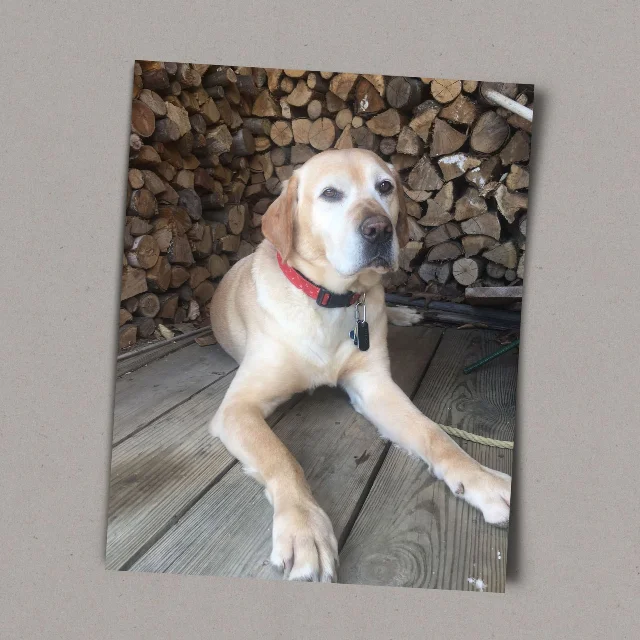
Three patient cases anchor the reporting: Julio, a geriatric Labrador mix whose owners disagreed on when to let him go; Jingo, a small dog with tracheal collapse whose owner rearranged her life to accommodate his declining health; and Tango, a cat whose owner delayed a decision she came to regret. Through them, Puri maps the clinical and emotional terrain of a field that barely existed a generation ago. The International Association for Animal Hospice and Palliative Care, founded by Chicago veterinarian Amir Shanan in 2009, now counts more than 1,500 veterinarian-members worldwide. 1
The essay also ventures into a structural asymmetry between pet hospice and its human equivalent: unlike human hospice, pet hospice is almost entirely out-of-pocket, carries no life-expectancy requirement, and — crucially — can include euthanasia, which remains illegal for humans in the United States. 1 Puri does not moralize about this gap. She just lets you sit with it.
The core argument
Pet hospice raises the same hard questions that animate human palliative care — what is a good quality of life, how much suffering is too much, when is the right moment to let go — but answering them for animals is harder, because the animal cannot tell you how it feels. 1 A feline pain scale wasn't developed until the 2000s; it asks clinicians to read whisker position. Puri's argument, implicit rather than declared, is that learning to ask these questions for the creatures we love without reservation may be the only rehearsal most of us get for asking them about ourselves.
The essay does not prescribe an answer. It gives you the tools to think more clearly — and more honestly — about a conversation that is almost certainly coming.
One line to read it for
"Our pets have no concept of time. They only know how well or badly they feel at any given moment." 1
— Cheryl London, professor of veterinary oncology at Tufts University
Read it here
"When Should You Say Goodbye to a Pet?" — Sunita Puri, The New Yorker, Weekend Essay, published June 6, 2026. Approximately 24 minutes.
Loading content card…
Cover image: illustration from When Should You Say Goodbye to a Pet? / The New Yorker
Add more perspectives or context around this Post.